Why the current label outranks the catalogue page
A product page may be old, abbreviated or written for promotion. The physical pack should identify the food and provide the applicable product-specific information. Before gifting, ask for readable current label photographs if you cannot inspect the pack yourself.
Read five elements together
- Food name and ingredients: confirm what the item actually is and the order of declared ingredients.
- Allergen declaration: look for relevant contains or may-contain statements; never infer absence from a traditional name.
- Net quantity: compare edible contents, not outer-box size.
- Date and storage information: interpret the date with the stated storage conditions.
- Responsible business information: identify the party shown on the pack and retain transaction evidence.
Best before is not a universal safety switch
FSSAI’s labelling framework defines “best before” around the period in which stated quality is retained under stated storage conditions, while also making clear that unsafe food must not be sold. A date does not rescue damaged packaging or poor storage, and a visually intact pack does not replace allergen information.
Worked gift-box check
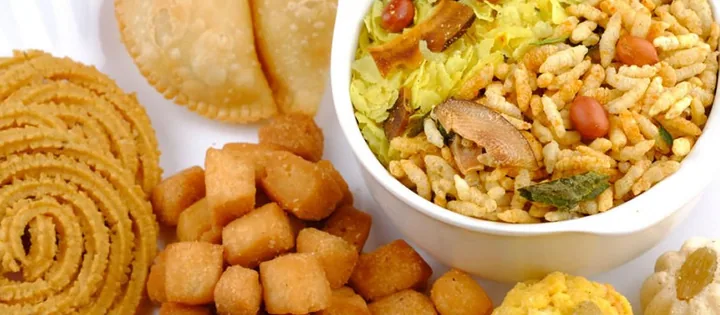
Imagine a box with sealed chakli, ladoo and dry fruit units. Check each unit for its applicable label information, then compare dates with the planned gifting and travel period. If one item has a materially shorter practical window, ask whether it can be replaced or dispatched later. Record the agreed composition because substitutions can change allergens as well as taste.
When the recipient has an allergy
A general website guide cannot determine safety for a person with a serious allergy. Obtain the current label, ask a specific cross-contact question and let the recipient or an appropriate professional make the decision. “Homemade”, “traditional”, “pure” and “natural” are not substitutes for that evidence.
Nutrition and portions
ICMR-NIN’s 2024 guidance supports varied diets and limiting excess fat, sugar and salt. For gifting, this supports transparent portions and a varied selection rather than unsupported “healthy” claims. Do not turn a general dietary principle into a medical promise about one snack.
Conclusion
A responsible food gift is readable, traceable and suited to the journey and recipient. If the label cannot be reviewed, narrow the claim and the order instead of guessing.
Sources
- FSSAI Labelling and Display Regulations compendium, checked 2026-09-23
- ICMR-NIN Dietary Guidelines for Indians 2024
Keep evidence with a remote gift
If the gift goes directly to another address, ask that label information remain visible and include a plain message telling the recipient to review it before sharing. Keep the dated quote and dispatch reference until delivery issues are resolved. Avoid rewriting ingredient or allergen information in your own words: a photograph or the pack itself reduces transcription mistakes.
Inspect packaging, not just print
Readable information is essential, but physical condition also matters. Look for broken seals, moisture, leakage, unusual swelling or obvious damage. Do not rely on smell or appearance as a complete safety test. When condition is doubtful, stop and contact the responsible seller instead of trying to rescue the presentation.
Editorial disclosure: this guide may support product enquiries, but it is written to remain useful without a purchase. No medical, certification, availability or delivery claim is inferred.